Overview:
Bread
Designing a Budgeting Experience That People Would Actually Use
"Most budgeting apps don’t fail because they lack features. They fail because people feel overwhelmed the moment they open them."
When we started working on Bread, we spoke with users who had already tried multiple finance apps. They downloaded them with good intentions, opened them once or twice, and quietly abandoned them.
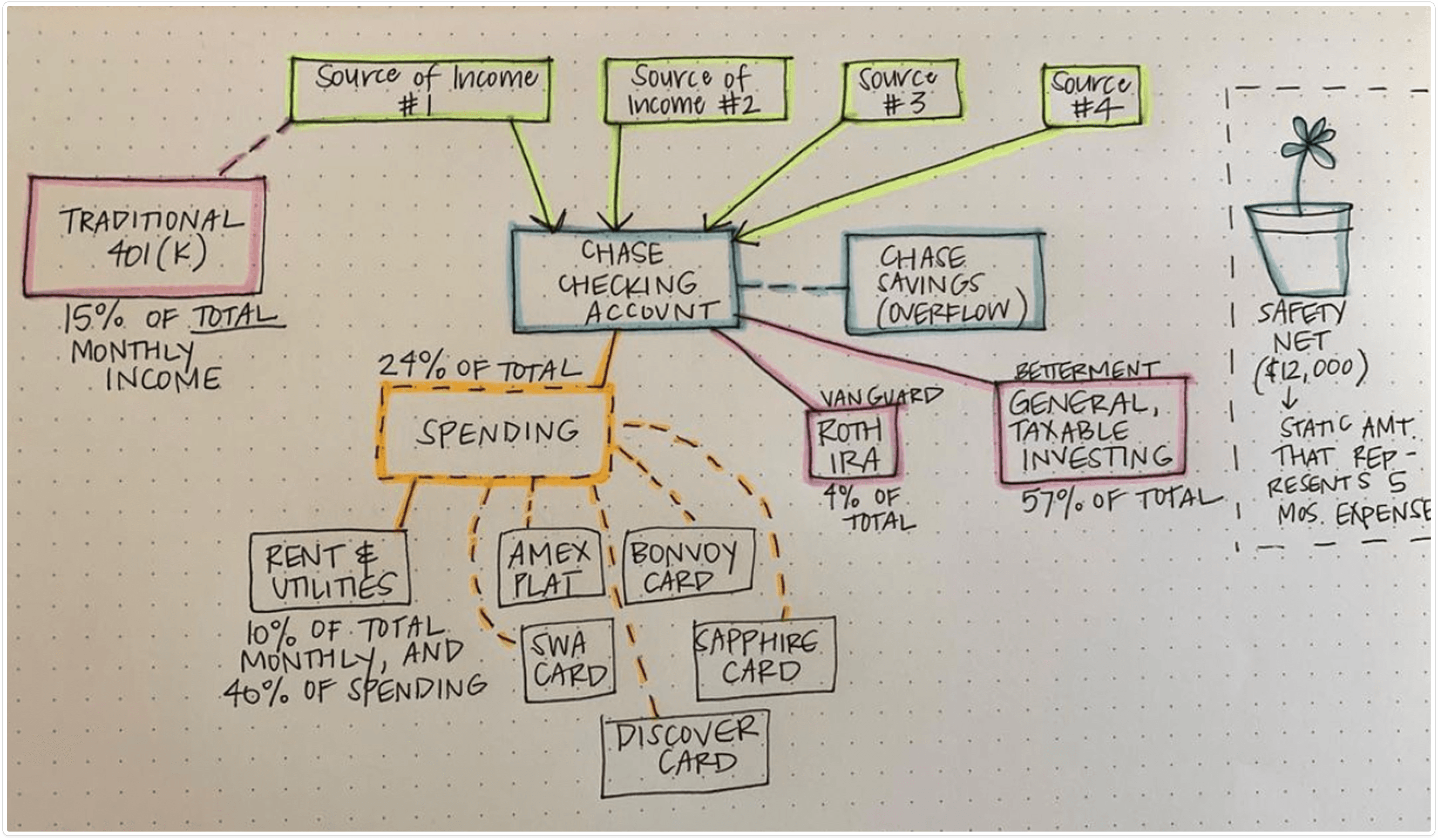
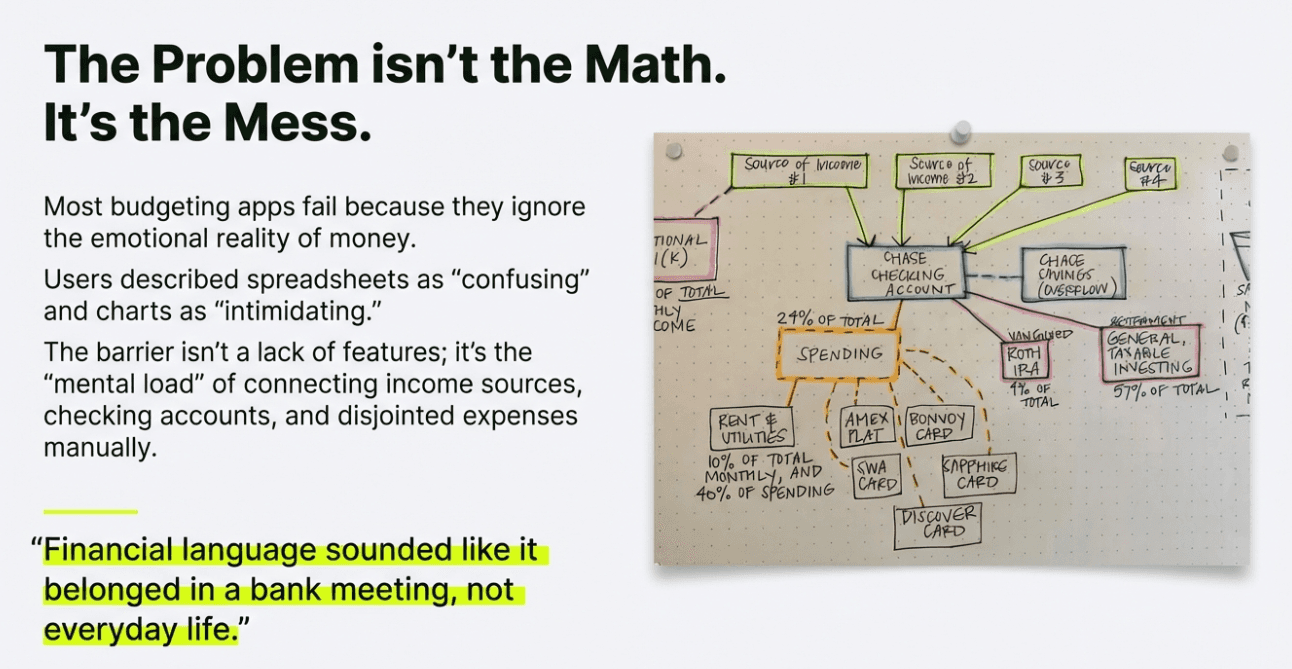
Spreadsheets were confusing. Charts felt intimidating. Financial language sounded like it belonged in a bank meeting, not everyday life.
People didn’t want more data.
They wanted clarity.
Bread was built to change that.
The Problem We Saw
Users weren’t avoiding budgeting because they didn’t care about money.
They were avoiding it because the experience made them feel anxious, guilty, or lost.
Common pain points emerged:
• Finance apps felt technical and cold
• Expense categories were hard to understand
• Users couldn’t quickly see where money went
• Setting goals felt complicated
• Financial jargon created fear instead of confidence
Budgeting had become something people postponed instead of practiced.
We needed to make money management feel approachable.
Designing Bread
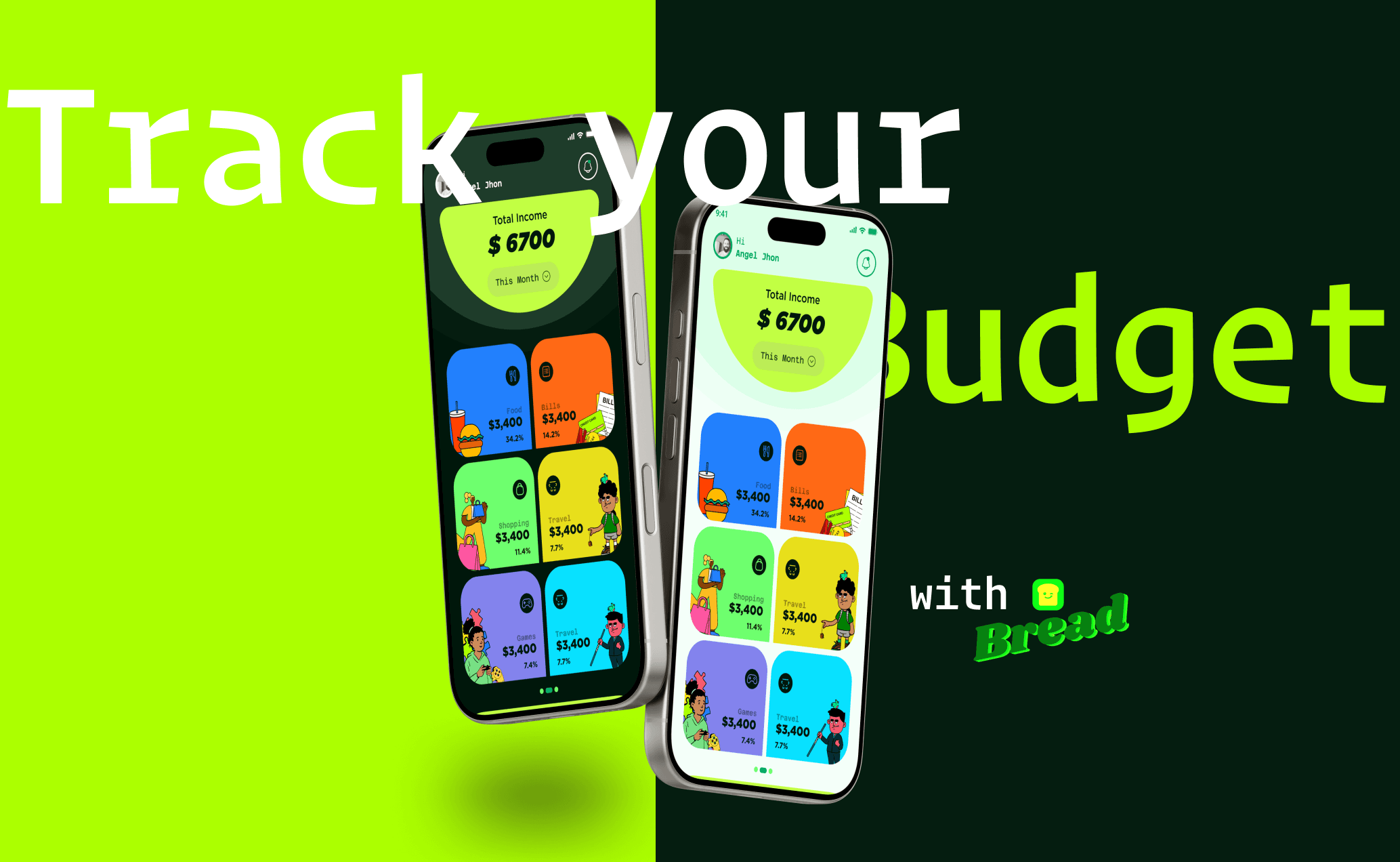
We reimagined budgeting as a visual, friendly, and interactive experience.
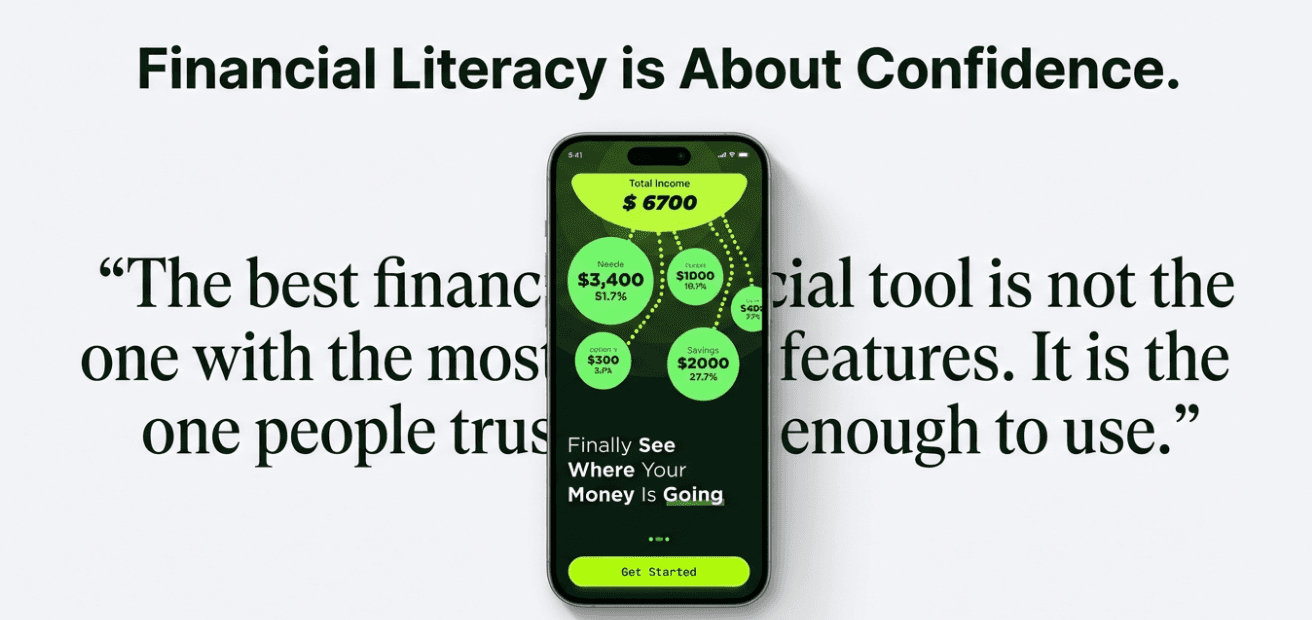
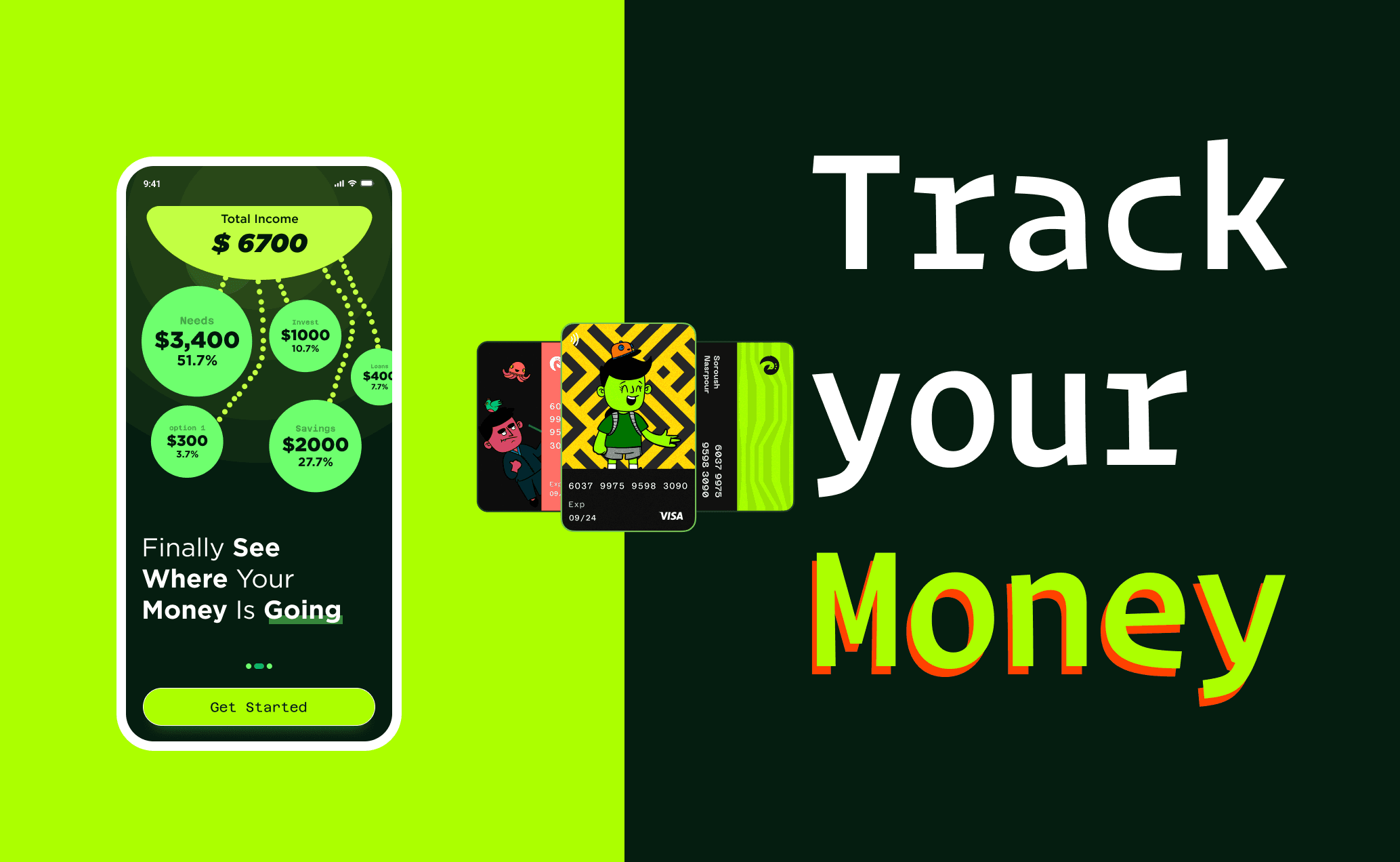
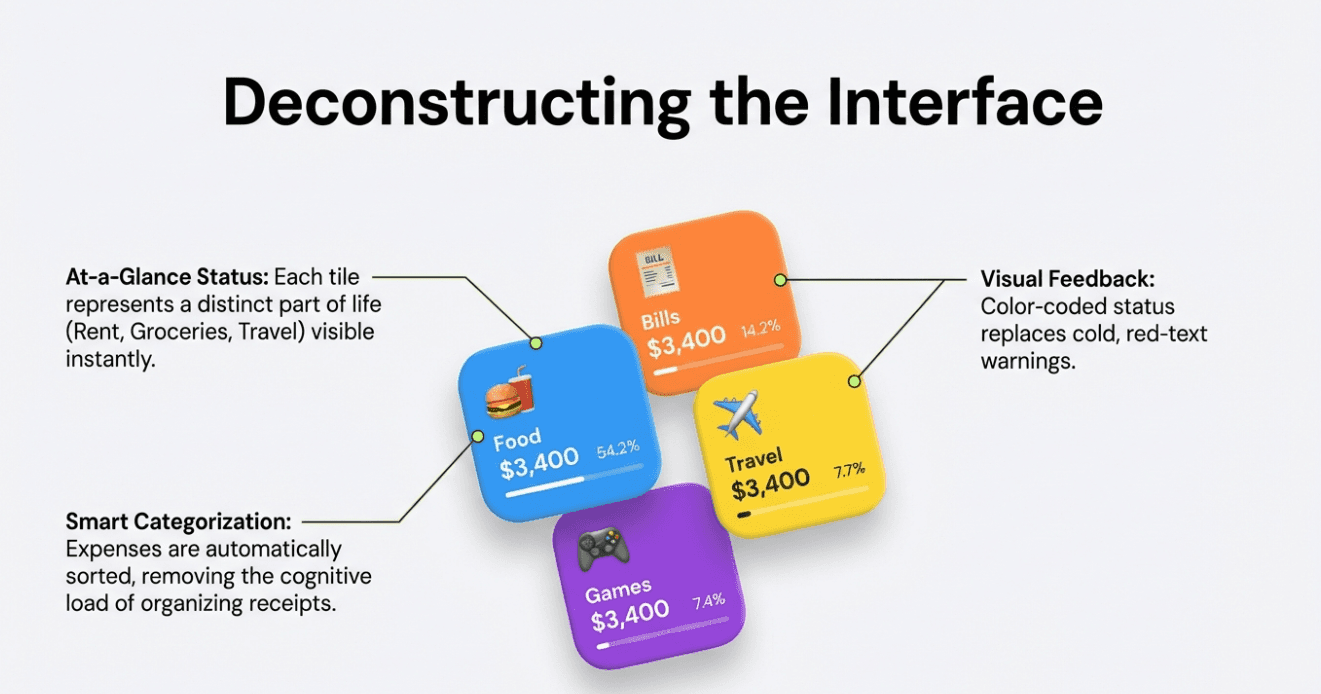
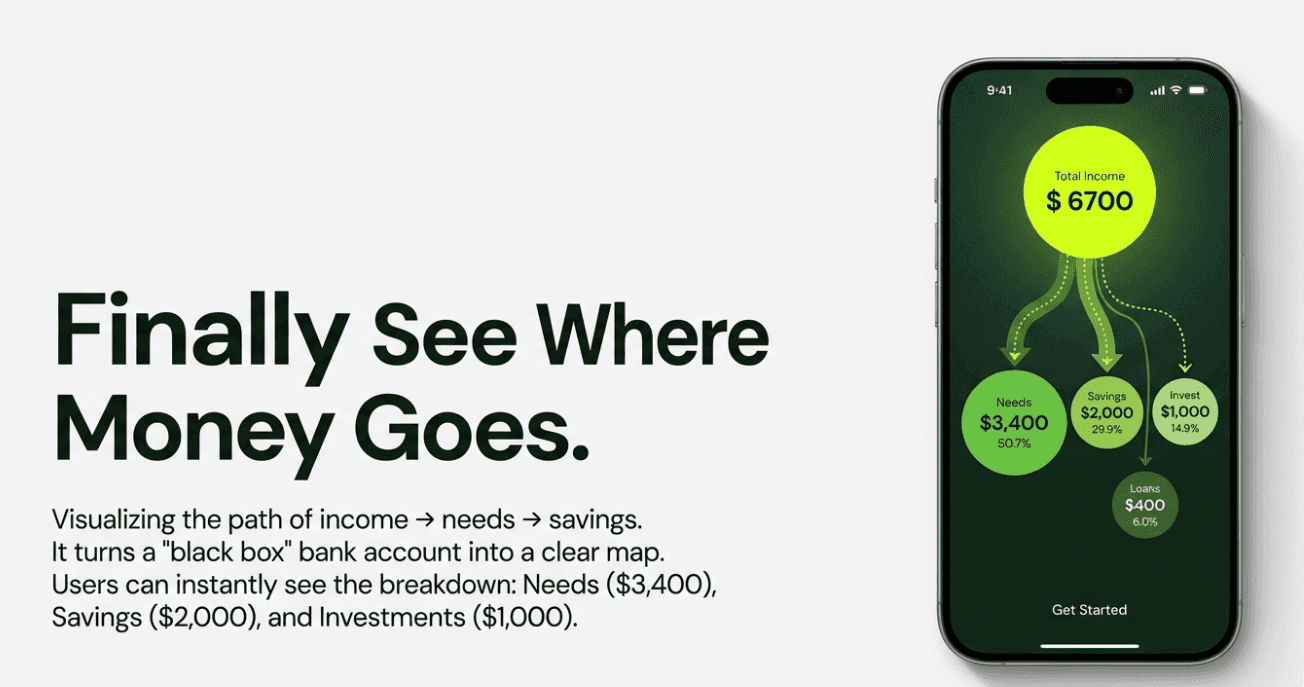
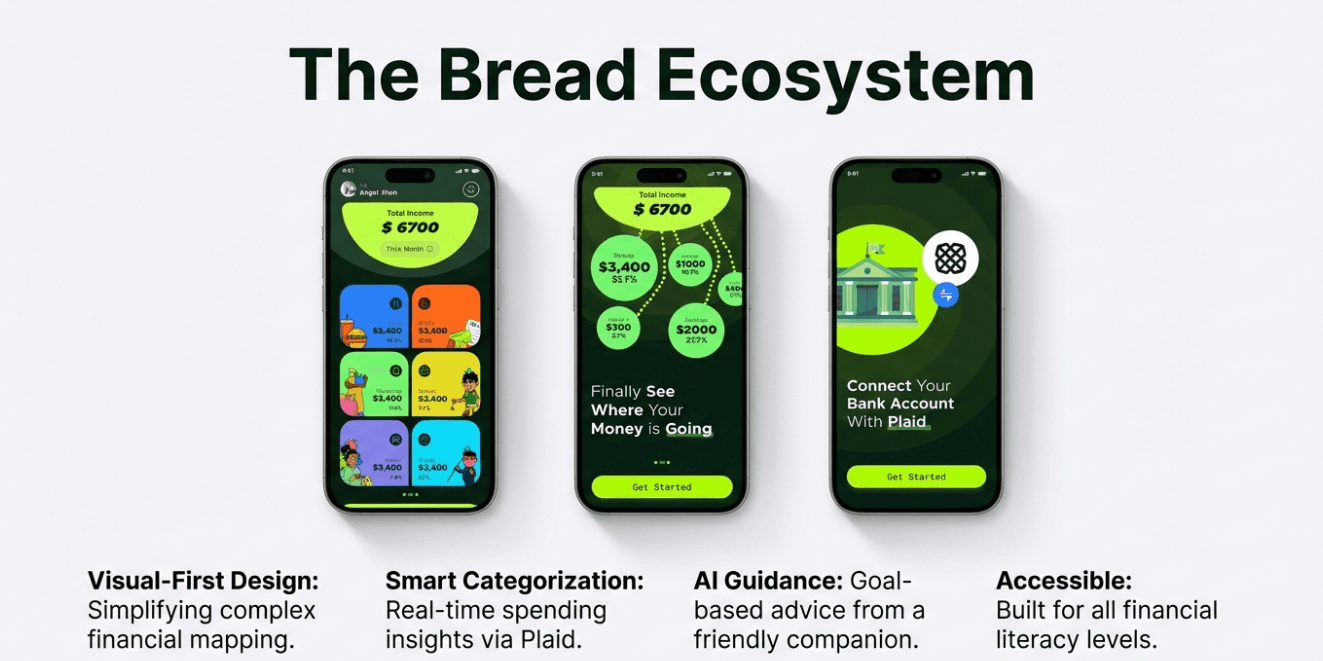
Instead of static spreadsheets, Bread introduced colorful “budget tiles” that showed income, spending, and savings in a way users could understand instantly. Each tile represented a part of their financial life — rent, groceries, travel, subscriptions — all visible at a glance.
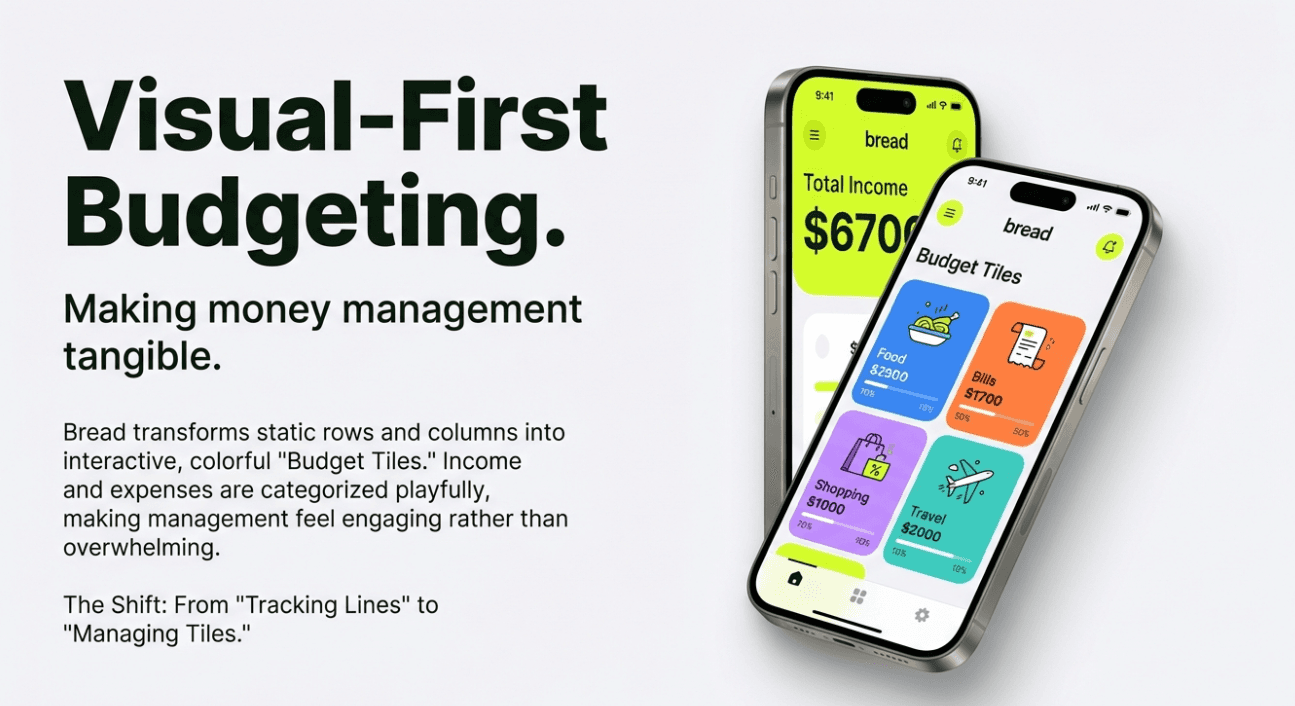
Money stopped feeling abstract.
It became something users could see and manage.
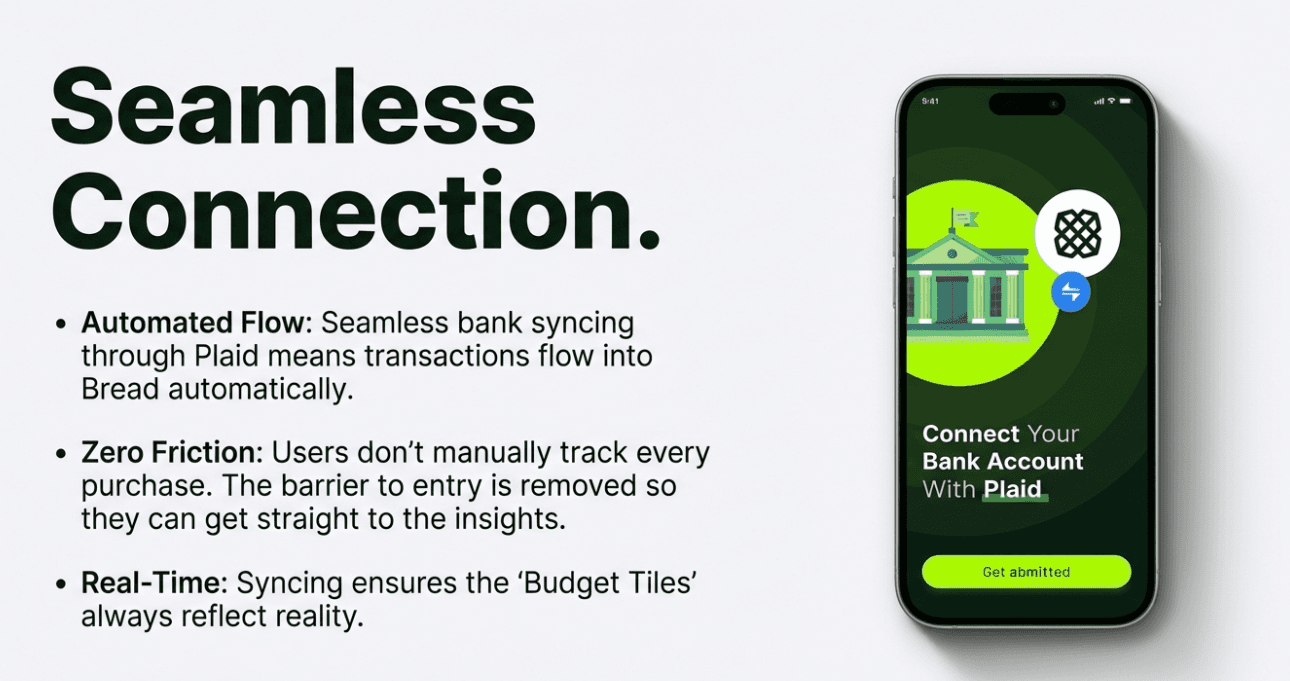
Bringing Automation and Clarity Together
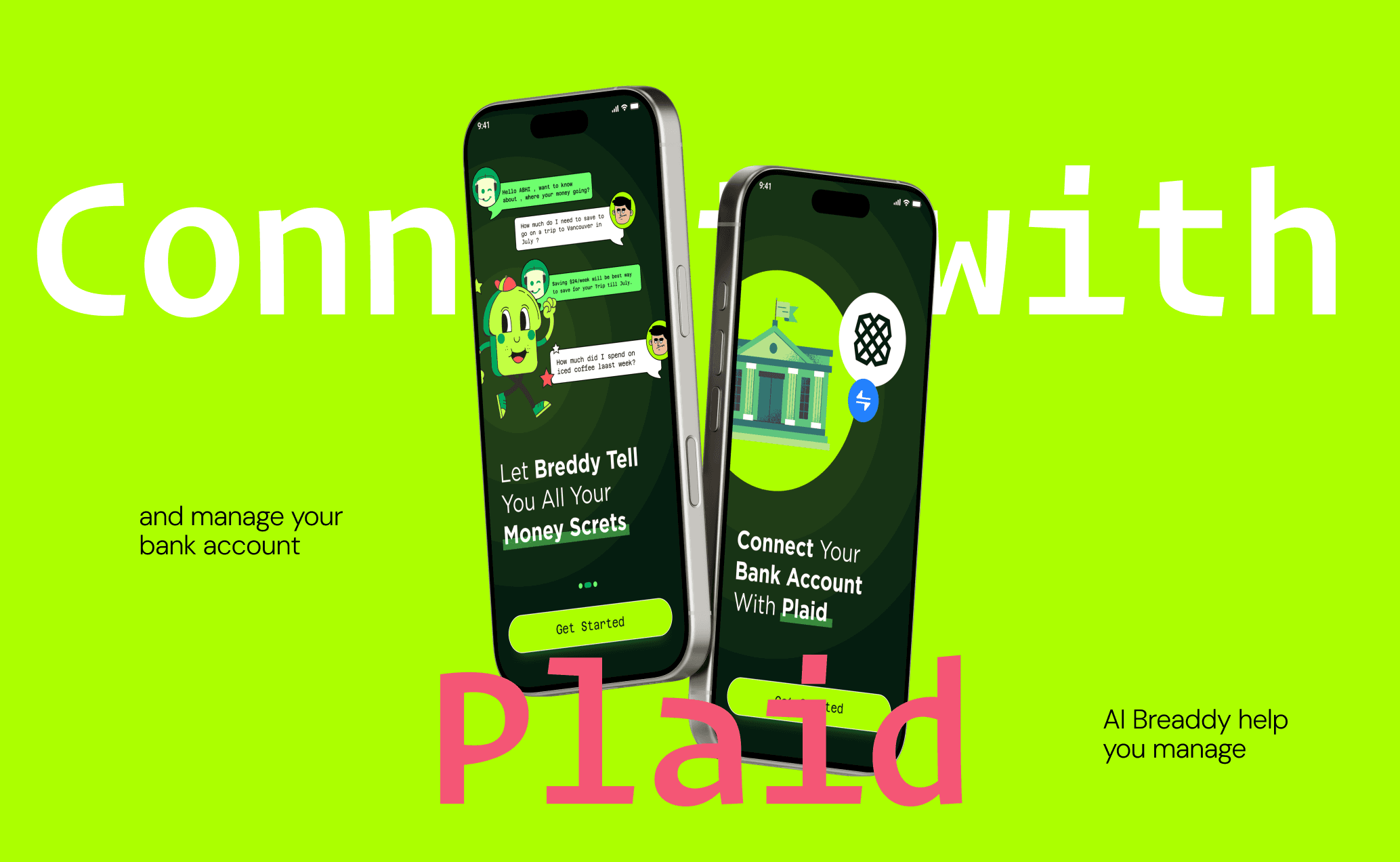
With seamless bank syncing through Plaid, transactions flowed into Bread automatically. Users didn’t have to manually track every purchase. They could simply open the app and understand their spending patterns.
But insight alone wasn’t enough.
People needed guidance.
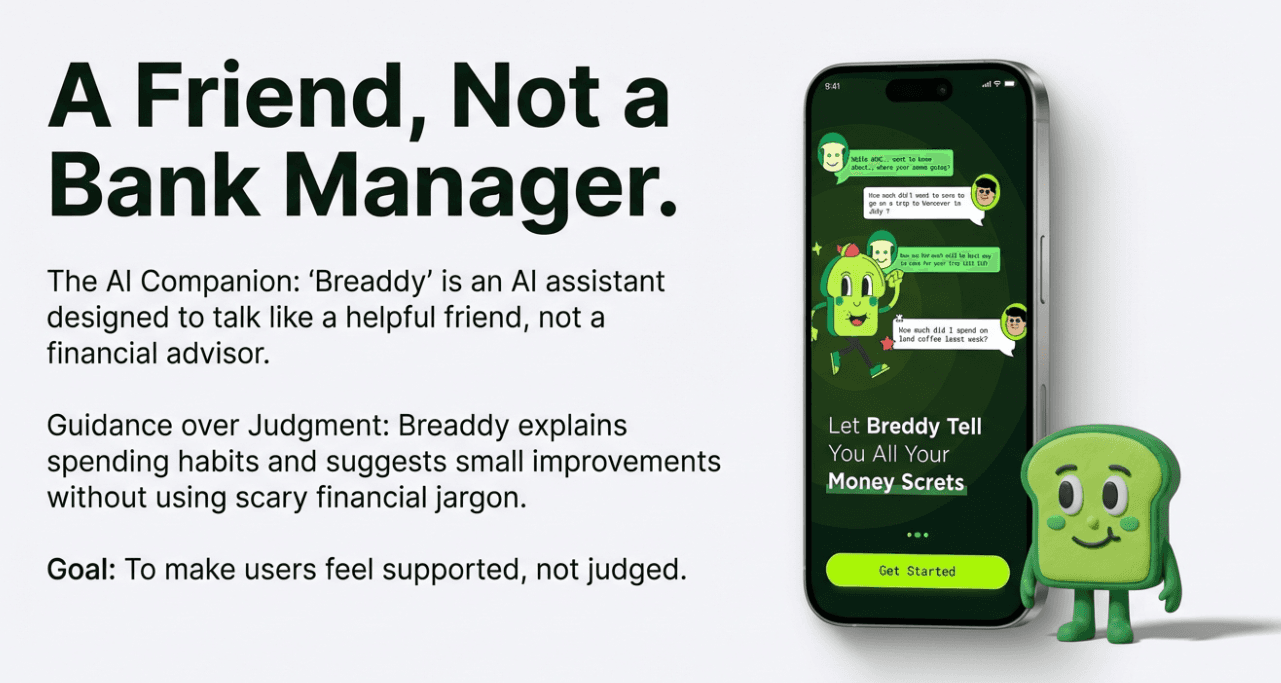
So we introduced “Breaddy,” an AI assistant designed to talk like a helpful friend, not a financial advisor. Breaddy explained spending habits, suggested small improvements, and helped users stay on track with goals — one step at a time.
Instead of feeling judged, users felt supported.
What Made Bread Different
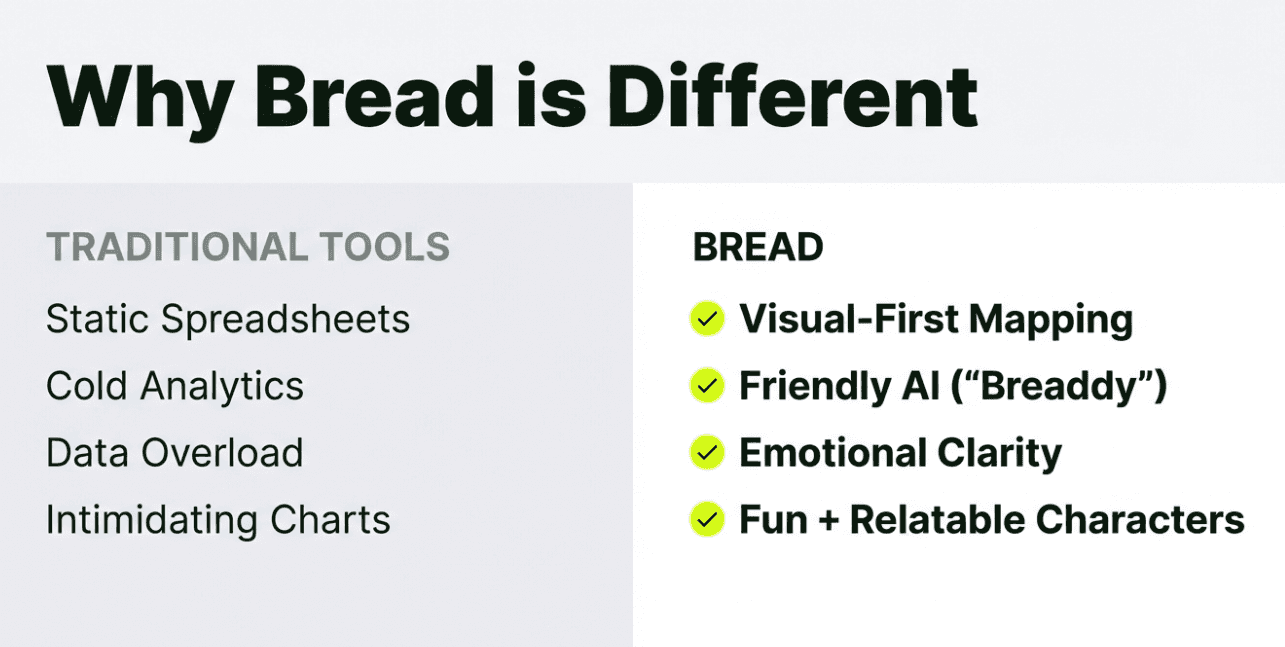
Bread focused on emotional clarity as much as financial clarity.
Visual-first budgeting simplified complex money tracking.
Smart categorization helped users understand real spending patterns.
An AI companion guided users through decisions without overwhelming them.
Friendly characters and approachable design replaced intimidating finance dashboards.
The app became something users wanted to check — not something they avoided.
The Real Impact
When budgeting becomes understandable, people stay consistent.
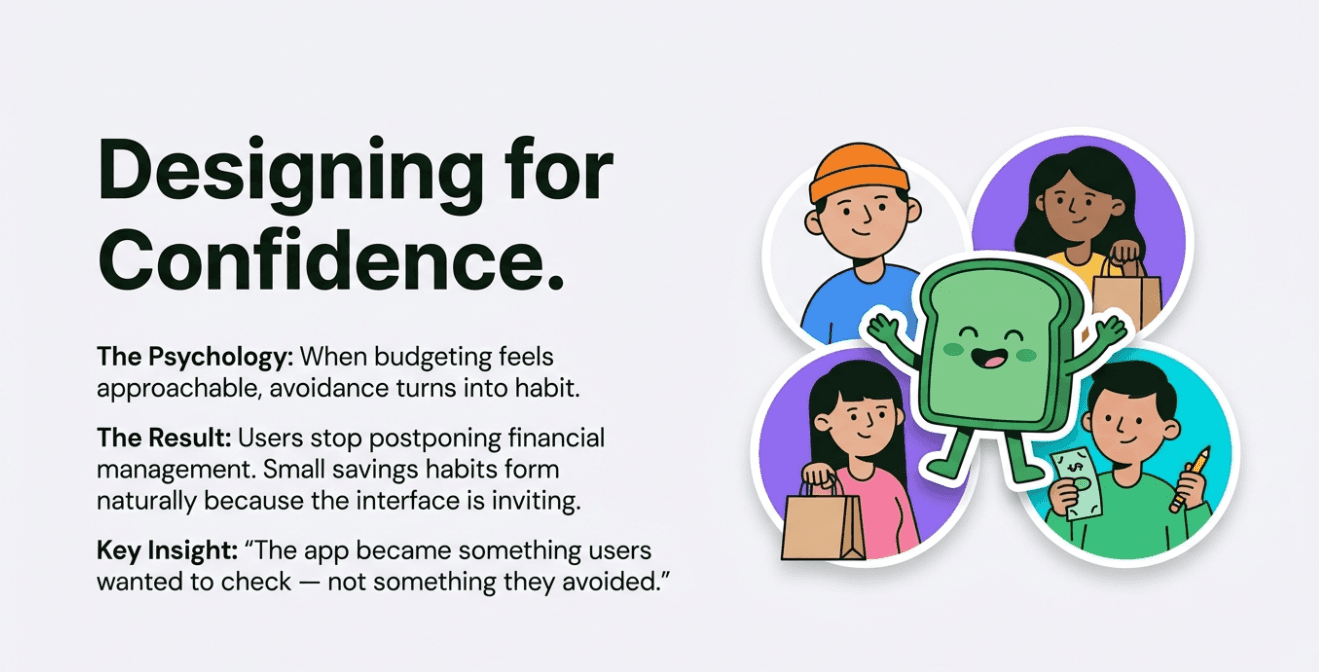
Users could finally see where their money went each month. They started setting realistic goals. Small savings habits formed naturally.
More importantly, users felt in control.
Bread didn’t just track money.
It changed how people felt about managing it.