
Overview:
Please Request for figma view access to full case study with purpose from Contact form
UX Research Case Study
Understanding Medical-Based Skincare Decisions in Urban India
When we began studying India’s medical-based skincare ecosystem, our goal was simple: understand why users who were actively trying to improve their skin were ending up frustrated, financially drained, and distrustful of treatment.
What we found was not a single usability problem, but a systemic UX failure across diagnosis, product discovery, guidance, and follow-up care.
Just like in OTT platforms where poor navigation leads to churn, poor decision flows in skincare were leading to emotional stress, wasted money, and harmful outcomes.
Research Approach
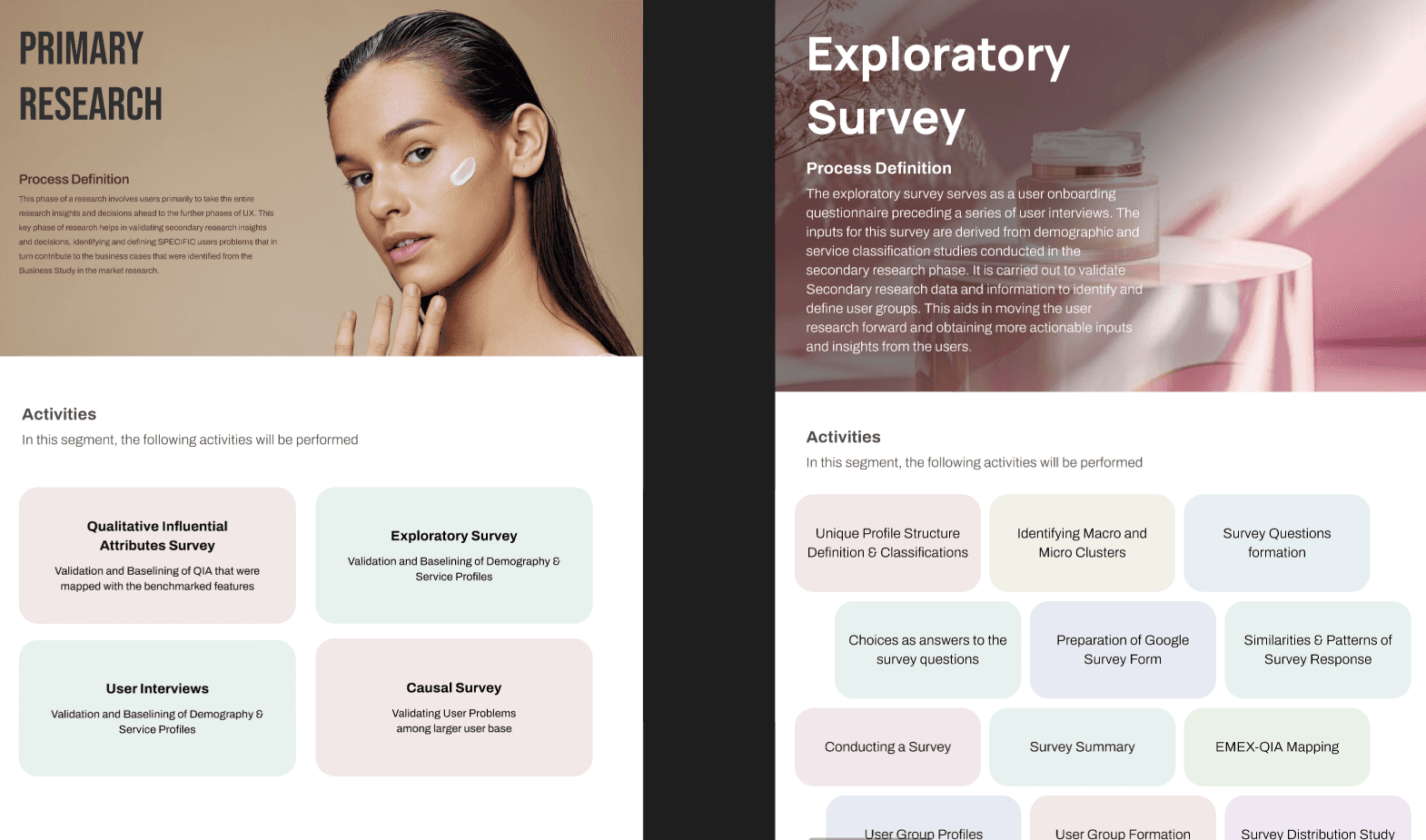
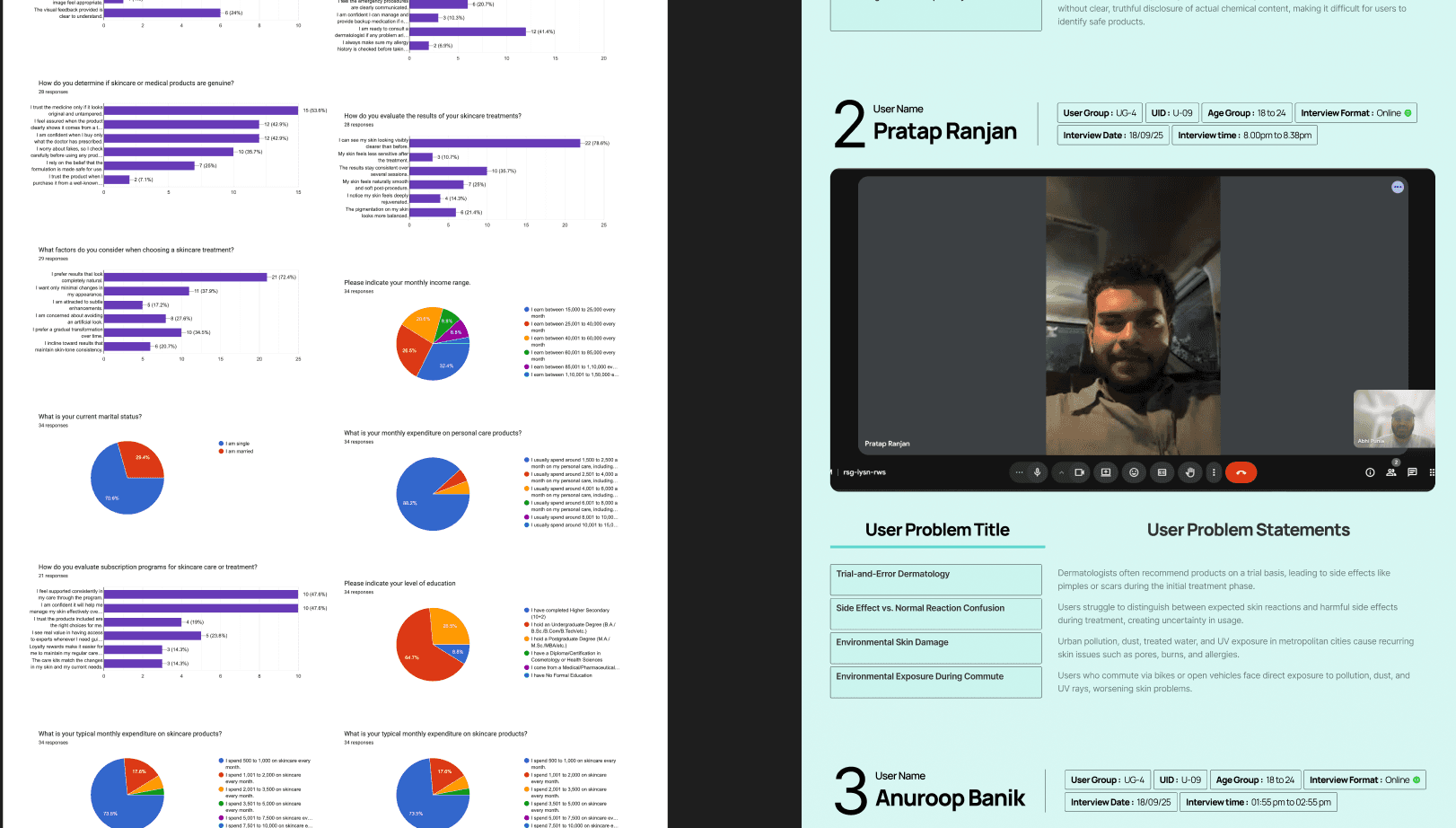
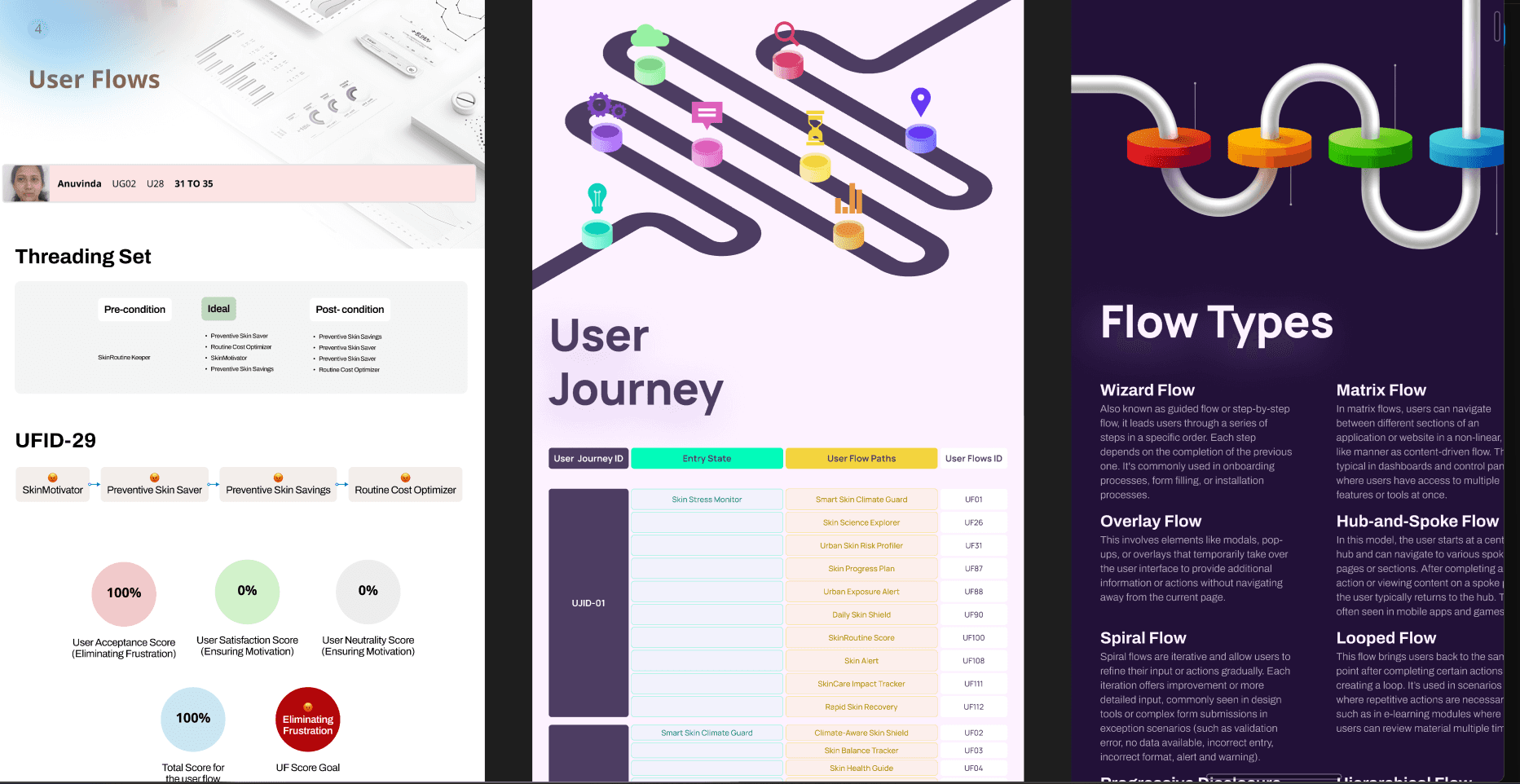
We conducted structured research with urban skincare consumers using an evidence-based CORE UX framework that combines behavioral interviews, journey mapping, and validation loops.
The study identified eight critical failure points across the user journey with extremely high detection confidence and strong validation agreement from participants.
These issues were not isolated usability problems.
They were patterns repeated across cities, income groups, and product categories.
What We Discovered
1. Misuse of Medical Skincare Products
Many users were applying prescription-grade products without proper guidance.
They relied on social media, friends, or online reviews rather than dermatological context.
This led to:
• Severe adverse reactions in multiple participants
• Large numbers abandoning treatment halfway
• Re-purchasing new products repeatedly hoping for improvement
The economic impact of misuse alone was estimated to be in the hundreds of thousands of crores annually.
But beyond money, the emotional impact was stronger.
Users described feeling “helpless,” “guilty,” and “confused” after spending heavily on treatments that worsened their skin.
This mirrors what we see in OTT UX when users cannot understand why recommendations feel wrong. Trust collapses.
2. Lack of Awareness of Environmental and Dietary Triggers
Users believed skincare products were the only solution, ignoring lifestyle and environmental causes such as pollution, sleep, diet, or stress.
Because these triggers were invisible in their mental model, users kept switching products instead of addressing root causes.
This led to:
• Recurring skin problems
• Chronic product spending
• Growing skepticism toward medical skincare
From a UX perspective, the system failed to educate users at the right moment in their journey. Information existed, but not in a usable, actionable form.
The estimated economic burden from these invisible triggers reached tens of lakh crores annually.
3. Trend-Driven Skincare Decisions
Users were heavily influenced by influencers, reels, and trending products.
Products were chosen because they were popular, not appropriate.
This created a cycle of experimentation:
buy → react → stop → try something new
Millions of users experienced negative outcomes due to trend-driven choices, and hundreds of billions were wasted on ineffective products.
In UX terms, discovery systems were optimized for popularity, not relevance.
The same failure pattern exists in poorly tuned OTT recommendation engines that promote trending content instead of personalized content.
Why This Matters
Urban skincare users operate under constant pressure.
Pollution exposure, work stress, and social expectations create urgency to “fix” visible skin issues quickly.
When users enter a confusing ecosystem filled with misinformation, complex medical terms, and influencer noise, they rely on shortcuts.
These shortcuts lead to misdiagnosis, misuse, and mistrust.
The result is not just financial loss.
It is reduced confidence in healthcare systems, emotional distress, and long-term skin damage.
From a business standpoint, this also means churn, brand distrust, and reduced lifetime value.
The UX Insight
Across all three business cases, one theme was consistent:
Users were making decisions without a clear mental model.
They did not understand:
• what problem they actually had
• what product was meant to solve
• how lifestyle factors interacted with treatment
• how long results should take
The ecosystem forced users into guesswork.Good UX replaces guesswork with guided clarity.
Actual Impact
This research quantified not just usability issues, but real-world consequences:
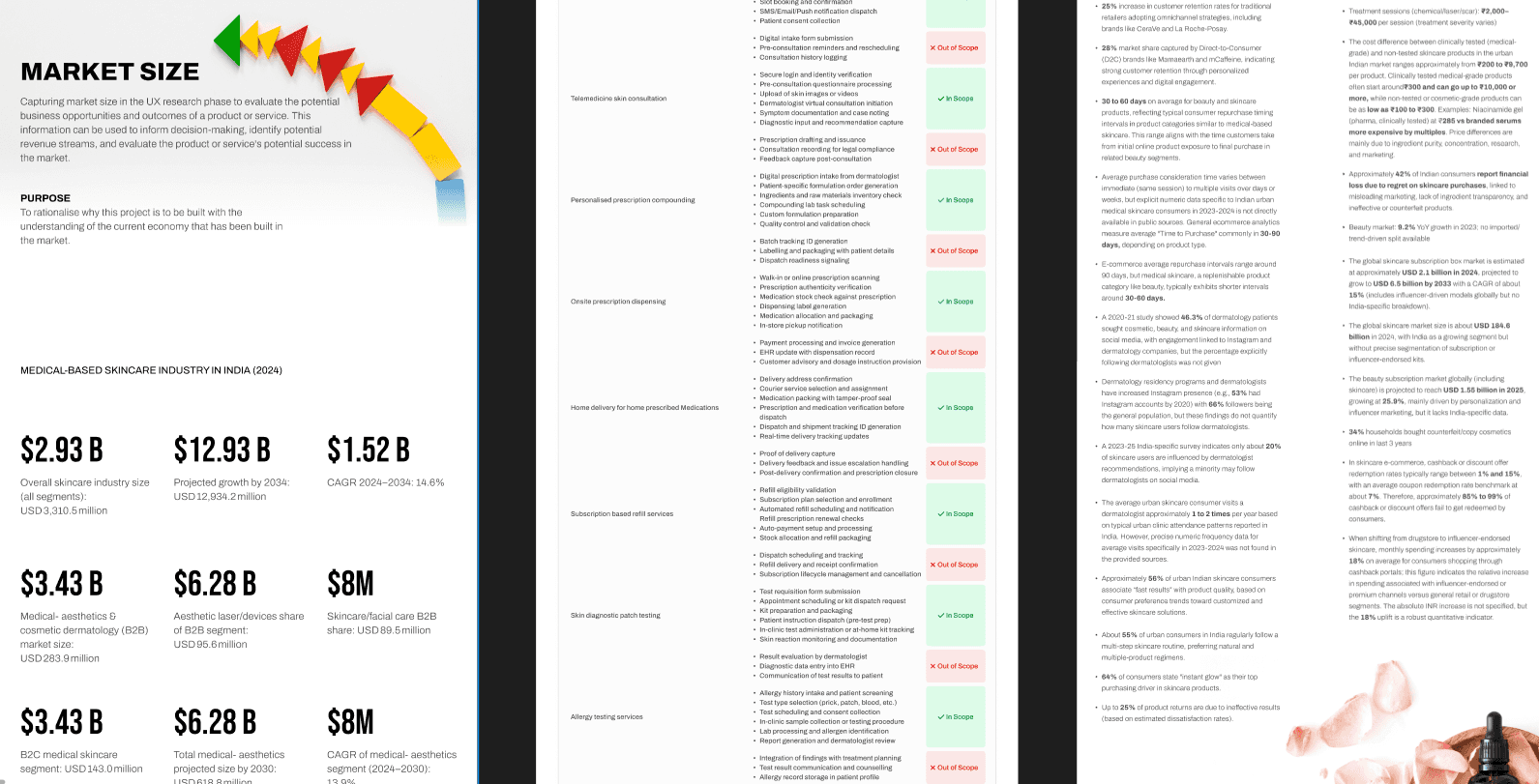
• Massive national-scale financial waste
• Millions of affected users
• High product discontinuation due to side effects
• Loss of trust in medical skincare solutions
These are not abstract UX problems.
They are measurable economic and behavioral outcomes.